
We Train Hunting Dogs on a Working Colorado Ranch. Here's What That Actually Looks Like.
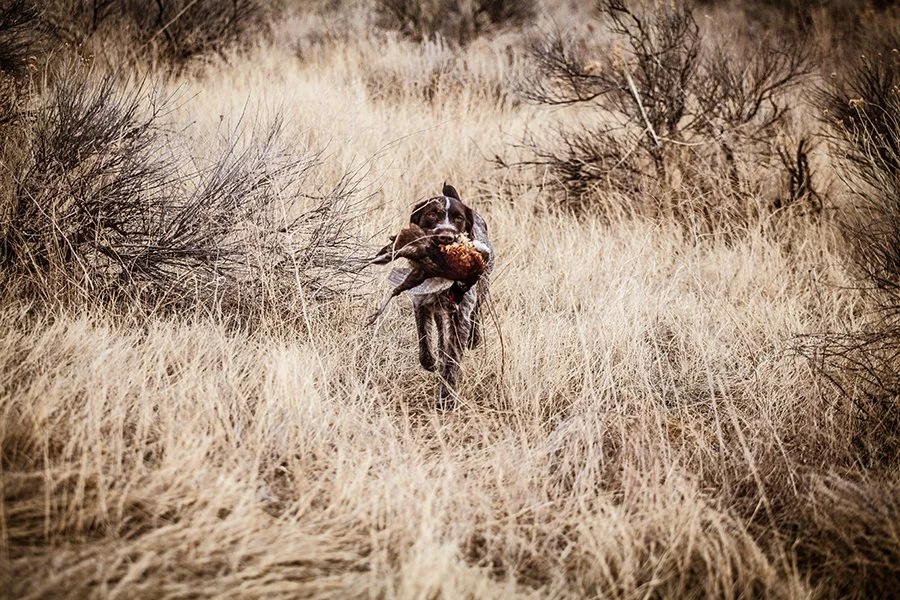
Most people who contact me have already been through at least one trainer. Sometimes two. The dog still doesn't hold point reliably, still breaks at the flush, still treats a recall command as a suggestion. They're frustrated, not just with the dog, but with vague answers and programs that never quite explained what they were actually doing.
So let me be straight with you about how we do things at Silverback Griffs, and you can decide if it's what your dog needs.
Obedience is the foundation, but it's not the ceiling
A lot of trainers stop at obedience. Sit. Stay. Come. And look, that stuff matters. But a hunting dog has to do all of that under pressure - when there's a bird in the air, when the gun fires, when every instinct in that dog's body is screaming to go. If the training only happened in a quiet yard, it hasn't been tested.
Every dog we work with goes through obedience first. Then we take it into the field. We expose them to real birds, real terrain, real distractions. The 44 acres here at Devenney Ranch aren't just a backdrop. They're the training tool. A dog that works here has seen conditions close to what you'll actually hunt.
Bird work and gun conditioning take time… and that's okay
Here's something I tell every owner upfront: there's no fast version of this. You can rush a dog through a program and get something that looks trained. It won't hold.
For most dogs, the foundation work takes four to eight weeks. Some need more, particularly if they're coming in with bad habits already baked in or if they haven't been introduced to birds properly. Temperament matters. Age matters. What happened before they got to me matters.
I'd rather be honest about that on the front end than take your money and hand you back a dog that falls apart the first time conditions aren't perfect.
What "ranch-based training" actually means
There's a difference between training a dog and training a dog to perform when it counts. Working on a real ranch means your dog learns in an environment that isn't sterile. Wind. Scent. Variable terrain. Other animals around. The kind of unpredictability that a controlled facility can't replicate.
I'm not saying facility training is worthless. But if you're building a dog for the field, the field is where the work should happen. At least some of it.
When your dog comes home, the work isn't done
This is the part that catches some owners off guard. Training gives your dog a structure and a set of expectations. You have to maintain it. That means consistency with commands, following through when you ask for something, not letting things slide in week two because it's easier.
I walk every owner through exactly what that looks like before their dog comes home. It's not complicated, but it does require some commitment on your end. If you're not willing to hold the standard, the training will fade. That's just the reality.
Is this the right program for your dog?
We work with a small number of dogs at a time. That's not a marketing line. It's how we maintain quality. So we're selective about what dogs we take on, and I'd rather have that conversation up front than waste anyone's time.
If you've got questions about your dog, what they need, or whether what we do is the right fit, reach out. I'm happy to talk it through.
Contact us to discuss your dog and see if we’re the right fit.